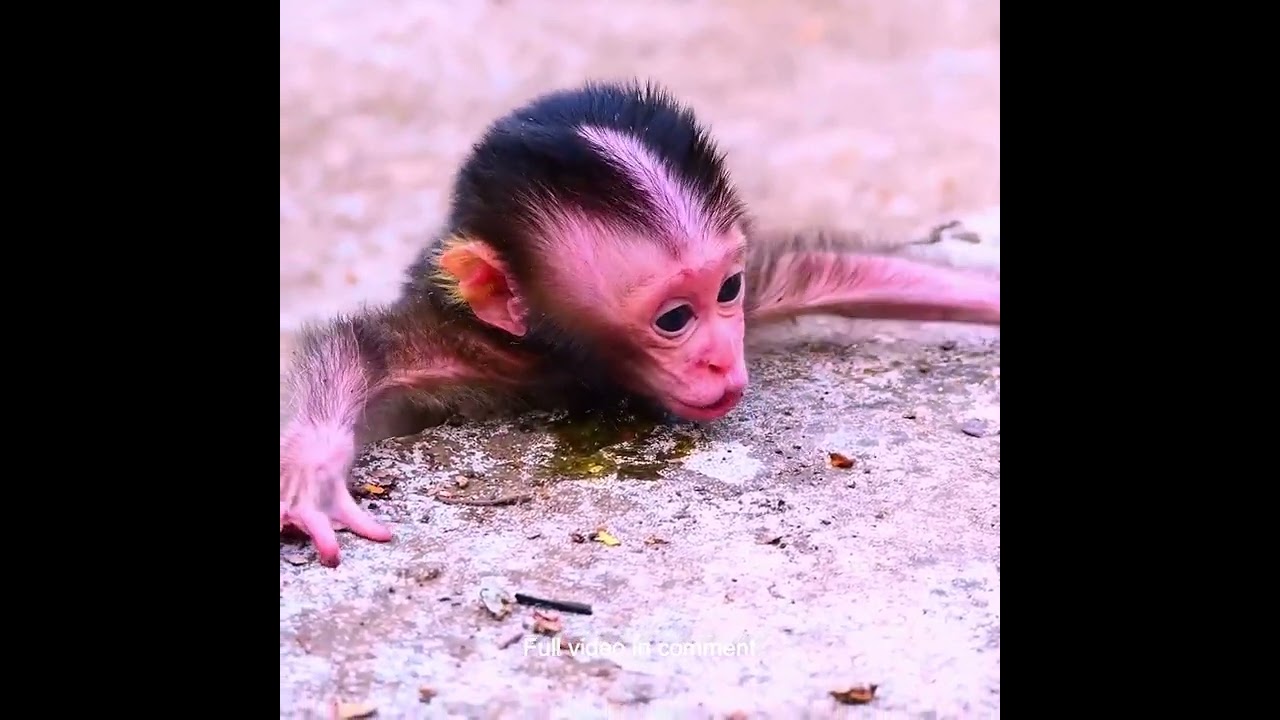
In a heart-wrenching scene, a newborn monkey, still wet from birth, finds itself in a precarious situation as its mother appears to abandon it. The tiny creature, vulnerable and helpless, instinctively begins to cry out, its high-pitched wails echoing through the surrounding environment. This desperate call for attention is not just a plea for survival; it is a natural response that reflects the deep bond typically shared between a mother and her offspring in the animal kingdom. The cries of the newborn resonate with urgency, highlighting the instinctual need for maternal care and protection that is crucial for its survival in the wild.
The abandonment of such a young primate raises significant concerns about its future. Without the nurturing presence of its mother, the newborn monkey faces numerous challenges, including the risk of starvation, exposure to predators, and the absence of social learning that is vital for its development. In the wild, maternal care is essential for teaching young monkeys how to forage for food, navigate their environment, and interact with other members of their species. The cries of the newborn not only signal its distress but also serve as a reminder of the critical role that maternal figures play in the early stages of life for many animals.
Fortunately, in some cases, compassionate individuals or wildlife rescue organizations may intervene to provide assistance to abandoned animals. If the newborn monkey is discovered in time, it may be taken in by caregivers who can offer the necessary support and care it desperately needs. This intervention can include feeding, shelter, and socialization with other monkeys, which are all vital components for the healthy development of the young primate. The story of this abandoned newborn monkey serves as a poignant reminder of the fragility of life in the wild and the importance of protecting vulnerable species from the challenges they face in their natural habitats