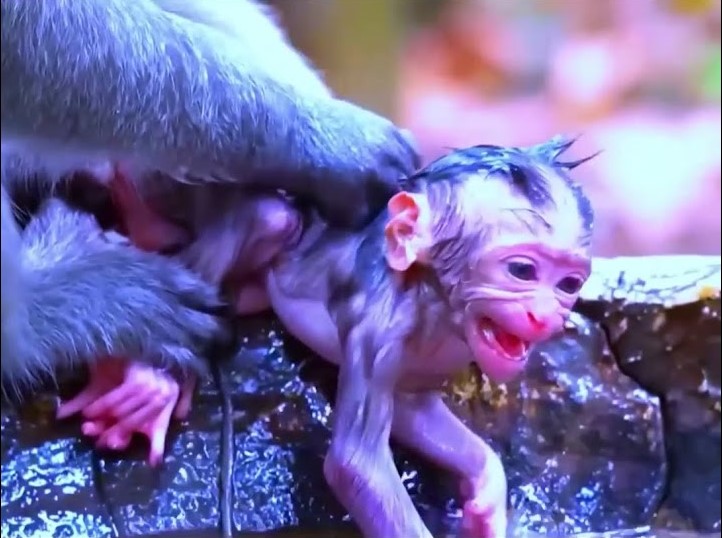
The sight of a newborn baby monkey can evoke a range of emotions, particularly when observing the way its mother interacts with it. In the animal kingdom, maternal instincts are crucial for the survival of the young. A mother monkey may place her newborn in a specific position or location for various reasons, including ensuring the baby’s safety and comfort. For instance, she might be trying to keep the infant close to her body to provide warmth and protection from potential threats in their environment. This instinctual behavior is vital, as it helps the baby feel secure and fosters a strong bond between mother and child.
Additionally, the positioning of a newborn monkey can also be influenced by the need for the mother to attend to her own needs or the needs of the group. In some cases, a mother may need to forage for food or move to a safer location, and she will carefully place her baby in a secure spot, ensuring it is still within her reach. This behavior reflects the delicate balance that mothers must maintain between caring for their offspring and fulfilling their own survival needs. The mother’s actions are guided by instinct, which has been honed over generations to maximize the chances of the young monkey’s survival.
Furthermore, the way a mother monkey handles her newborn can also be a reflection of her own experiences and the social dynamics of her group. Some mothers may be more attentive and nurturing, while others might display a more hands-off approach, depending on their individual circumstances and the support they receive from other group members. This variability in maternal care can significantly impact the development of the young monkey, influencing its social skills and ability to thrive within the group. Ultimately, the mother’s actions are a complex interplay of instinct, environmental factors, and learned behaviors that shape the early life of her offspring.